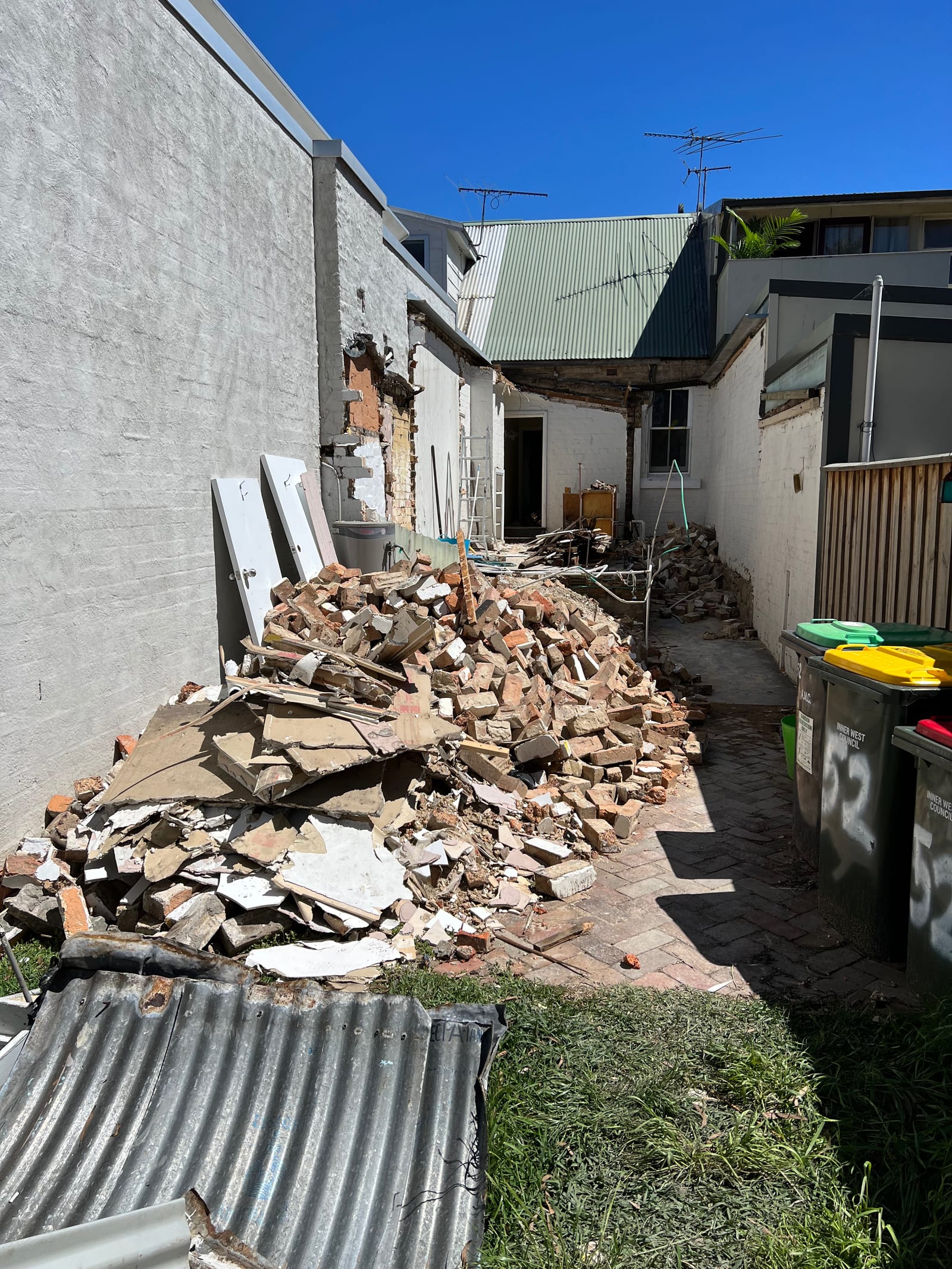
Can you live in your home during the work?
If you plan to renovate while still living in your house, decide from the proposed work and household needs. The responsible builder needs to assess whether areas can be suitably separated and essential facilities kept available. Renovation projects can change as conditions become clearer, so the stay plan needs reassessment.
Write down the conditions for staying. Include usable sleeping space, washing and toilet facilities, food preparation, secure access and planned service outages. Identify any household need that makes an interruption difficult, such as limited mobility, care responsibilities or a required quiet space. Living through a renovation needs an agreed plan, not simply a promise to be flexible.
| Decision | Agree before work | Change that needs reassessment |
|---|---|---|
| Essential facilities | Which rooms and services remain usable, and during which periods. | A facility becomes unavailable beyond the agreed arrangement. |
| Access | Separate household routes and restricted areas. | The remaining route crosses active work or becomes unsuitable. |
| Household needs | Sleep, care, school, working arrangements and pets. | A household need cannot be met under changed conditions. |
| Fallback | Where you could move and who confirms the decision. | A safety concern or scope change makes the stay plan unsuitable. |
The table is an owner’s planning aid. It does not certify a property as suitable to occupy or replace the contractor’s assessment of the construction process. For a major renovation, ask how activities beyond the changed room affect the stay plan.
Keep the building site separate
Ask for an access and separation plan that fits the actual property. Identify household entrances, deliveries, waste movement and the construction zone. Agree how residents will be told about restricted areas and changes to the boundary.
Keep young children, pets and visitors out of work areas. An adult at home should not be assumed to supervise on-site access while also managing household responsibilities. Agree how trade access, unexpected visitors and deliveries will be directed.
Discuss dust and noise, including how work could affect adjacent rooms. A barrier alone does not establish that living on site is suitable. Do not plan to pass around demolition, structural openings or live services. Ask the responsible person to explain any conditions that require the household to leave.
Bathroom and kitchen access
Map essential facilities room by room. Ask when water, electricity, hot water and the shower may be unavailable and whether the alternative is suitable. A room can appear untouched while sharing services with the area being changed. Assess remaining living space and access together.
A temporary kitchen needs assessment for the equipment, services and household. Before setting up temporary facilities, request that assessment. Do not assume a makeshift kitchen or an improvised appliance arrangement is appropriate. If food preparation or washing cannot be supported under the plan, resolve a suitable place to stay before that part of the work begins.
Consider the route between remaining rooms as well as the rooms themselves. A working facility on the other side of restricted work does not solve the access question. Confirm what happens during a planned outage and who will give notice if its timing changes.
Protect the daily routine
As a homeowner, list the non-negotiable parts of household life and discuss them early. If you work from home, identify calls or tasks that need quiet and reliable connectivity. Consider sleep, school departures, medication, care visits and storage that keeps essential items accessible without clutter. Discuss what each person needs to cope with disruption while meeting the assessed stay conditions.
- Agree one household contact and one construction contact.
- Record times when access or noise affects essential activities.
- Keep everyday items accessible without entering restricted areas.
- Tell visitors and delivery services about the agreed entrance.
- Review arrangements when the programme or household needs change.
These practical tips help organise the renovation process discussion; they do not guarantee normal household life. A home renovation can involve disruption even where occupancy remains suitable. Compare the effort of remaining with the practical requirements of leaving, rather than assuming one choice will save you money.
Renovation work and suspected asbestos
Resolve suspected hazardous material before disturbance. NSW asbestos guidance highlights homes built before 1990 and directs owners to appropriate assessment. Do not disturb material you suspect contains asbestos.
If a concern emerges after the project is underway, stop work and contact a licensed asbestos assessor. Keep people away from the affected area and follow the assessor’s advice. Do not treat a visual guess or a household dust-control measure as clearance to continue or remain nearby.
When temporary living becomes necessary
Agree relocation triggers before the household is under pressure. They might include loss of essential access, an unsuitable separation arrangement, a changed service outage or a new hazard requiring assessment. The relevant trigger is the project-agreed condition, not a fixed number of days that applies to every house.
Identify temporary accommodation with suitable access and facilities for the people and pets affected. Check availability and moving arrangements. If you need to rent somewhere, assess that separately; no saving or cost is assumed here. A delay or revised finish date may also require the stay decision to be revisited.
Questions about staying in your home
Can you live at home during renovation?
Sometimes. The proposed scope must allow suitable separation, essential facilities and access for your household. Have those conditions assessed before deciding, and agree what would trigger a move if the plan changes.
Does having a second bathroom guarantee we can stay?
No. Shared services, access, structural work and hazards may still make occupancy unsuitable. Assess the whole proposal rather than using one spare room as the deciding factor.
How should children, pets and site visitors be planned for?
Agree restrictions, supervision and household arrangements before work starts. Visitors need to understand the boundary and contact process. A construction area should not be treated as normal household space.
What if suspected asbestos appears after work starts?
Do not disturb it. Stop work and contact a licensed asbestos assessor. Keep people away from the area and follow the assessor’s advice. A dust screen does not establish suitable occupancy.
For suspected hazardous material, follow the official asbestos advice and the appropriate professional’s direction.
Agree realistic expectations with the builder
Record the stay conditions, contacts and fallback alongside the proposed scope. Revisit them before access or services change. Discuss household constraints through Panadium’s home project service. If the scope changes, use the separate written change questions to keep the agreement current.